Published in Queen’s Quarterly, Summer 2026
Softly spoken for minor pains, ‘Medic!’ they screamed when struck by lead or whirling steel. “You’ll be fine,” I lied to them, slapping on bandages which burned bright red. With each occurrence, dire or commonplace, I cared for the weary grunts of third platoon. Will always care for them.
I recall the ambush where a new man accidentally shot Bill point blank. As I knelt to him, “Bill, it’s Doc,” I said. But in the chaos of rockets and AKs he could not hear me. From the jungle I wrote to his wife, omitting what really happened. When I received her frantic letter—she had yet to receive the army telegram, whose blunt message delivered heartless thanks, I buried her anxious words within my pack. Slowly, like the war itself, the burning pages decomposed beneath the monsoon rains, the scorching heat.
 I recall the night when I huddled beneath two layers of sandbags atop a steel culvert, the enemy mortars raining down. After the attack I coaxed a dazed man from a burning bunker. “Let’s go!” I shouted into his bloodied ear. “This place is on fire! As we stumbled into moonlight, a blood soaked man, desperately clutching his chest, staggered toward me. “Daacchhh,” he wheezed, then tumbled, hitting the earth with a sickening thud, his eyes unblinking. By the fifth casualty my hands shook uncontrollably. I’d never done that before.
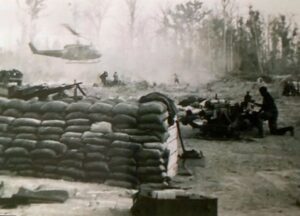
The day Ross was shot, “Goddam it, that’s us!” screamed the lieutenant into the black radio handset held by DeVries. The three of us frantically waved to the chopper pilot fifty meters overhead, the excited door gunner of the buzzing craft still firing, the lieutenant screaming, “Cease fire! Cease fire!” When the chopper yielded, “Get up there, Doc,” he yelled, and I scrambled up that muddy hill, only to be stunned by what I saw. Ross, his right arm mangled, the muscles and bones of his left leg brilliant in fresh air, howled and thrashed wildly.
What to do? What? I straddled him. Pressed thick white bandages onto the awful wounds. “Ross,” I shouted, “do you believe in Jesus?” And louder, “Do you believe in fucking Jesus?” Where this came from I do not know. “C’mon,” I shouted. “Stop shaking and pray!”
The poor man writhed in agony until I jabbed him with morphine. When the medevac arrived I knelt down and cupped his ear. “Listen to me, Ross…everyone loves you.” Then I stood and turned so he would not see my distorted face, my anguished tears.
I waited four decades to start my quest for third platoon. It took that long to sober up. To quit the deadening meds. To admit to myself that “it”—my nightmares, daily fears, would never really end. Still, I hoped the search might ease my guilt and grief, my pent up rage.
I’d lost count of the doctors and therapists who tried and failed to heal me. How ironic to learn that our lieutenant, a born killer, a thoroughly reckless young man, became the sheriff of Bloomington, Indiana. We had a decent chat. Before saying goodbye, I asked, “Whatever happened to the new guy who shot Carl?” “He killed himself,” the sheriff said.
To be honest, it felt good hearing those words. Friendly new guys, FNGs we called them, before they grasped the cadence of this war—the rhythm of we walk into the enemy, they walk into us, we walk into each other—new men did stupid things. While trading emails with our squad leader, back then, at eighteen an excellent shot, presently seventy, twice divorced, I was pleased to learn he’d retired from IBM with full benefits.”Great talking to you, Doc,” he said. And Ross? Poor gimp-arm, fake-leg Ross had only a blurred memory of that day.
And so it went. Of the fifteen men I have located thus far—twenty-five including widows, sons and daughters—I truly admired just one. Not the lightning quick pointman Larry Roy. Or the sniper who bragged of his body count. Or the New York hippie whose brass peace symbol dangled from a lanyard around his neck. Not even the sergeant who lent me a canteen of water when I ran out.
Jack. There was something about him. A kindness, if you will. Like the rest of us, brandishing our automatic rifles, our nylon rucks filled with rations and ammo, canteens and Claymores and personal effects, he alone carried the bulky, twenty-six pound PRC-25 radio, never once complaining of its burdensome weight.
Wherever we went, however fast or slow we marched or crept through jungle, trekked through leech-filled paddies, waded in muddy streams, always, in his loud and clear or crisp whispered tones, he relayed, accurately, to or from the beckoning lieutenant, orders, co-ordinates, sitreps.
This pleasant, sturdy, reliable fellow Jack Stump, thrived in combat. Loved it. During that year of red dust and red rain, firefights and casualties and “Doc,” softly, “Medic!” screamed, half the platoon wounded, 12 KIA, we counted on Jack, who never once flinched in combat. Whatever happened to him?
The details of an obit held promise: “Wisconsin, Army vet, age 72, Vietnam service, married forty-one years, preceded in death by William, an infant son.”
Jack once told me William was born with a club-foot. I figured the boy had died. I made one phone call and lucked out. “
“He was a good man,” I said. “When things got bad you could count on him. Everyone trusted Jack.”
I am not ashamed to admit that more than once he saved my life. How could I ever repay him?
“Let me tell you something,” said Vern, Jack’s older brother. “When that boy came home he was quite the ladies man. Yes, sir. To where Rita caught him sleeping with the gal next door and threw him out. But Jack said no, said he loved Rita, and she forgave him. Good on her she done that.”
Vern said Jack died of heart attack. “With a Pabst Blue Ribbon in his hand. Just like him. Can you believe it? Now, you hold on, son. Don’t move. Be right back.”
There came the frictive sound of desk draws hurriedly opened and shut. Newspaper pages hurriedly fanned.
“You still there?”
“Still here.”
As Vern read from Jack’s obituary I stared at the same page on my computer screen.
“…3rd degree Mason, accomplished gardener, stamp and coin collector. He loved to hunt and fish and cared for his dogs.” Vern put the newspaper down. “A whole lot of folks turned out for the viewing. Where they buried him, it was a military funeral. One fella played Taps. The other give the flag to Rita. ‘On behalf of a grateful nature,’ he said. “No gun salute, mind you. Jack didn’t want that. No sir. Put it in the Will. ‘No more goddamn guns.’ Put it just like that.”
Vern had been married for thirty-seven wonderful years. Poor Rita, he mused. “Since Jack done passed she spends all her time helping the vet’rens. What you gonna do?”
Vern gave me Rita’s phone number and email address. “Well, you take care now. Thanks for calling.”
I sent my war photos to Rita, then called her. “Where were these photos taken, dear?” Her voice seemed frail, elderly.
“Vietnam,” I said.
“Oh no. My Jack was never in Vietnam. He fought in World War II.”
I was stunned, confused. How could this happen? I was certain I had the right man.
“Are you sure about that?”
“Oh yes,” said Rita. “Jack was injured at Normandy. I was his Army nurse. That’s how we met. Sometimes Vern gets things mixed up. My Jack…” her voice quivered. “My Jack fought in World War Two.”
What a strange turn of events. To have lost and found and lost a man I did not know, yet somehow cared for. What to make of this? Who to tell? My brother? Too patriotic. My co-worker Stan? Too straight and narrow. What about Wayne? The man I replaced in Vietnam. “That stuff you learned in medic school?” he’d said, “worthless.” In one hour Wayne taught me the best ways to treat fungal infections, tropical rashes, colds, muscle aches, shrapnel and sucking chest wounds. Gifted me his forty-five pistol. “You might need it,” he said, only half smiling.
Years back I’d started my search with Wayne. He wasn’t hard to find. By email, then phone, we traded war tales, told of our lives after Vietnam. The jobs we’d had. Therapists seen. The women we’d known. I hadn’t felt so invigorated in a very long time. From that day we stayed in touch. But no one answered when I called.
I checked his local newspaper. Wayne had survived a car crash. The family kept an online journal. “He’s doing better. Write to him!” it said. Inspired, I posted a long entry about the war, and how I found and lost Jack. I figured, of all people, Wayne, with his Combat Medic Badge, Purple Heart and two Bronze Stars, a serious case of war stress, would definitely get the gag.
As an afterthought I re-read the journals last entry. Beth, his daughter, had written, “My father is resting comfortably now.” Too late I realized this meant hospice care, which meant he was dying. What to do?
I emailed Beth. Would she forgive me? “No worries,” she replied. Knowing her father’s dark humor, she agreed that what I wrote would boost his spirits: Carl shot in the head. The casualties making me shake like a stick. Ross machine-gunned at close range. Jack from the grave snubbing a rifle salute. Rita putting it nicely that Vern messed up. “You know what? Call me,” said Beth. “Dad’s in a coma but the doctor says he’ll hear whatever you say. I’ll put you on speaker phone. Dad will appreciate that.”
I made the call.
“Wayne, this is Doc. Beth says you can hear me loud and clear.”
For thirty minutes non-stop I recalled how Wayne lucked out, the war much worse after he went home. On my first ambush, “Wayne, if you hadn’t taught me,”—I paused, swallowed hard—“all the wounded guys have you to thank. Do you remember…” The memories—patrol, jungle, ambush, monsoon—they just kept coming.
After a time I’d had enough of that. I figured Wayne did too.
“You know me, buddy. I could talk for hours. Right now, I want to thank you for all the years we’ve kept in touch. For all the good things you’ve done in life. Your charity work. The high school students you helped out. Listening to me sob when Liz and I broke up. You, pushing me to meet someone else. Like you always said, ‘Every day after Vietnam is a gift.’ Listen, buddy. If there’s a world after this one….” I nearly lost it. To buck myself up, “Wayne. Wayne, I know you can hear me. I know that. Well then, before you go—breathe… just breathe, my medic self said—safe travels, my friend. Safe travels.”
A long pause while I calmed down.
“You still there, Doc?”
For a few minutes Beth and I whimpered like lost children who’d found their way home. After saying goodbye, I sat and thought of Carl, how his dead face appeared so untroubled as the fighting raged on. I thought of Ross, blissfully ignorant of how he’d lost his leg. I thought back on how calmly Jack called in air strikes when our base was overrun. I thought of all the men in third platoon. I thought of both sides too, our living and our dead. Sitting quietly in a comfortable chair, reliving that time of chaos and caterwaul, loud and clear I repeatedly asked myself, was it worth it? I could only weep.
____________________
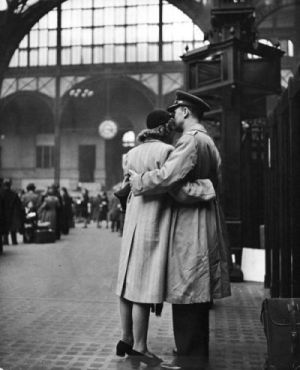
Top photo: A soldier bids farewell before departing. New York, Penn Station, April 1943. Source / Pinterest
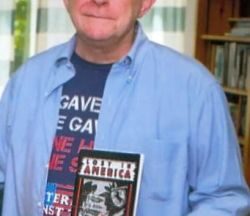
For more on Gene Locklear see Patching Up the Past in The Rumpus


Before You Go
Published in Queen’s Quarterly, Summer 2026
Softly spoken for minor pains, ‘Medic!’ they screamed when struck by lead or whirling steel. “You’ll be fine,” I lied to them, slapping on bandages which burned bright red. With each occurrence, dire or commonplace, I cared for the weary grunts of third platoon. Will always care for them.
I recall the ambush where a new man accidentally shot Bill point blank. As I knelt to him, “Bill, it’s Doc,” I said. But in the chaos of rockets and AKs he could not hear me. From the jungle I wrote to his wife, omitting what really happened. When I received her frantic letter—she had yet to receive the army telegram, whose blunt message delivered heartless thanks, I buried her anxious words within my pack. Slowly, like the war itself, the burning pages decomposed beneath the monsoon rains, the scorching heat.
The day Ross was shot, “Goddam it, that’s us!” screamed the lieutenant into the black radio handset held by DeVries. The three of us frantically waved to the chopper pilot fifty meters overhead, the excited door gunner of the buzzing craft still firing, the lieutenant screaming, “Cease fire! Cease fire!” When the chopper yielded, “Get up there, Doc,” he yelled, and I scrambled up that muddy hill, only to be stunned by what I saw. Ross, his right arm mangled, the muscles and bones of his left leg brilliant in fresh air, howled and thrashed wildly.
What to do? What? I straddled him. Pressed thick white bandages onto the awful wounds. “Ross,” I shouted, “do you believe in Jesus?” And louder, “Do you believe in fucking Jesus?” Where this came from I do not know. “C’mon,” I shouted. “Stop shaking and pray!”
The poor man writhed in agony until I jabbed him with morphine. When the medevac arrived I knelt down and cupped his ear. “Listen to me, Ross…everyone loves you.” Then I stood and turned so he would not see my distorted face, my anguished tears.
I waited four decades to start my quest for third platoon. It took that long to sober up. To quit the deadening meds. To admit to myself that “it”—my nightmares, daily fears, would never really end. Still, I hoped the search might ease my guilt and grief, my pent up rage.
I’d lost count of the doctors and therapists who tried and failed to heal me. How ironic to learn that our lieutenant, a born killer, a thoroughly reckless young man, became the sheriff of Bloomington, Indiana. We had a decent chat. Before saying goodbye, I asked, “Whatever happened to the new guy who shot Carl?” “He killed himself,” the sheriff said.
To be honest, it felt good hearing those words. Friendly new guys, FNGs we called them, before they grasped the cadence of this war—the rhythm of we walk into the enemy, they walk into us, we walk into each other—new men did stupid things. While trading emails with our squad leader, back then, at eighteen an excellent shot, presently seventy, twice divorced, I was pleased to learn he’d retired from IBM with full benefits.”Great talking to you, Doc,” he said. And Ross? Poor gimp-arm, fake-leg Ross had only a blurred memory of that day.
Jack. There was something about him. A kindness, if you will. Like the rest of us, brandishing our automatic rifles, our nylon rucks filled with rations and ammo, canteens and Claymores and personal effects, he alone carried the bulky, twenty-six pound PRC-25 radio, never once complaining of its burdensome weight.
Wherever we went, however fast or slow we marched or crept through jungle, trekked through leech-filled paddies, waded in muddy streams, always, in his loud and clear or crisp whispered tones, he relayed, accurately, to or from the beckoning lieutenant, orders, co-ordinates, sitreps.
This pleasant, sturdy, reliable fellow Jack Stump, thrived in combat. Loved it. During that year of red dust and red rain, firefights and casualties and “Doc,” softly, “Medic!” screamed, half the platoon wounded, 12 KIA, we counted on Jack, who never once flinched in combat. Whatever happened to him?
The details of an obit held promise: “Wisconsin, Army vet, age 72, Vietnam service, married forty-one years, preceded in death by William, an infant son.”
Jack once told me William was born with a club-foot. I figured the boy had died. I made one phone call and lucked out. “
“He was a good man,” I said. “When things got bad you could count on him. Everyone trusted Jack.”
I am not ashamed to admit that more than once he saved my life. How could I ever repay him?
“Let me tell you something,” said Vern, Jack’s older brother. “When that boy came home he was quite the ladies man. Yes, sir. To where Rita caught him sleeping with the gal next door and threw him out. But Jack said no, said he loved Rita, and she forgave him. Good on her she done that.”
Vern said Jack died of heart attack. “With a Pabst Blue Ribbon in his hand. Just like him. Can you believe it? Now, you hold on, son. Don’t move. Be right back.”
There came the frictive sound of desk draws hurriedly opened and shut. Newspaper pages hurriedly fanned.
“You still there?”
“Still here.”
As Vern read from Jack’s obituary I stared at the same page on my computer screen.
Vern had been married for thirty-seven wonderful years. Poor Rita, he mused. “Since Jack done passed she spends all her time helping the vet’rens. What you gonna do?”
Vern gave me Rita’s phone number and email address. “Well, you take care now. Thanks for calling.”
I sent my war photos to Rita, then called her. “Where were these photos taken, dear?” Her voice seemed frail, elderly.
“Vietnam,” I said.
“Oh no. My Jack was never in Vietnam. He fought in World War II.”
I was stunned, confused. How could this happen? I was certain I had the right man.
“Are you sure about that?”
“Oh yes,” said Rita. “Jack was injured at Normandy. I was his Army nurse. That’s how we met. Sometimes Vern gets things mixed up. My Jack…” her voice quivered. “My Jack fought in World War Two.”
What a strange turn of events. To have lost and found and lost a man I did not know, yet somehow cared for. What to make of this? Who to tell? My brother? Too patriotic. My co-worker Stan? Too straight and narrow. What about Wayne? The man I replaced in Vietnam. “That stuff you learned in medic school?” he’d said, “worthless.” In one hour Wayne taught me the best ways to treat fungal infections, tropical rashes, colds, muscle aches, shrapnel and sucking chest wounds. Gifted me his forty-five pistol. “You might need it,” he said, only half smiling.
I checked his local newspaper. Wayne had survived a car crash. The family kept an online journal. “He’s doing better. Write to him!” it said. Inspired, I posted a long entry about the war, and how I found and lost Jack. I figured, of all people, Wayne, with his Combat Medic Badge, Purple Heart and two Bronze Stars, a serious case of war stress, would definitely get the gag.
As an afterthought I re-read the journals last entry. Beth, his daughter, had written, “My father is resting comfortably now.” Too late I realized this meant hospice care, which meant he was dying. What to do?
I emailed Beth. Would she forgive me? “No worries,” she replied. Knowing her father’s dark humor, she agreed that what I wrote would boost his spirits: Carl shot in the head. The casualties making me shake like a stick. Ross machine-gunned at close range. Jack from the grave snubbing a rifle salute. Rita putting it nicely that Vern messed up. “You know what? Call me,” said Beth. “Dad’s in a coma but the doctor says he’ll hear whatever you say. I’ll put you on speaker phone. Dad will appreciate that.”
I made the call.
“Wayne, this is Doc. Beth says you can hear me loud and clear.”
For thirty minutes non-stop I recalled how Wayne lucked out, the war much worse after he went home. On my first ambush, “Wayne, if you hadn’t taught me,”—I paused, swallowed hard—“all the wounded guys have you to thank. Do you remember…” The memories—patrol, jungle, ambush, monsoon—they just kept coming.
After a time I’d had enough of that. I figured Wayne did too.
“You know me, buddy. I could talk for hours. Right now, I want to thank you for all the years we’ve kept in touch. For all the good things you’ve done in life. Your charity work. The high school students you helped out. Listening to me sob when Liz and I broke up. You, pushing me to meet someone else. Like you always said, ‘Every day after Vietnam is a gift.’ Listen, buddy. If there’s a world after this one….” I nearly lost it. To buck myself up, “Wayne. Wayne, I know you can hear me. I know that. Well then, before you go—breathe… just breathe, my medic self said—safe travels, my friend. Safe travels.”
A long pause while I calmed down.
“You still there, Doc?”
____________________
Top photo: A soldier bids farewell before departing. New York, Penn Station, April 1943. Source / Pinterest
For more on Gene Locklear see Patching Up the Past in The Rumpus